Clockwork Cashouts: How Session Timings Shape Payout Flows in Hybrid Gaming Formats
Nils Flores · Jun 15, 2026

Clockwork Cashouts: How Session Timings Shape Payout Flows in Hybrid Gaming Formats
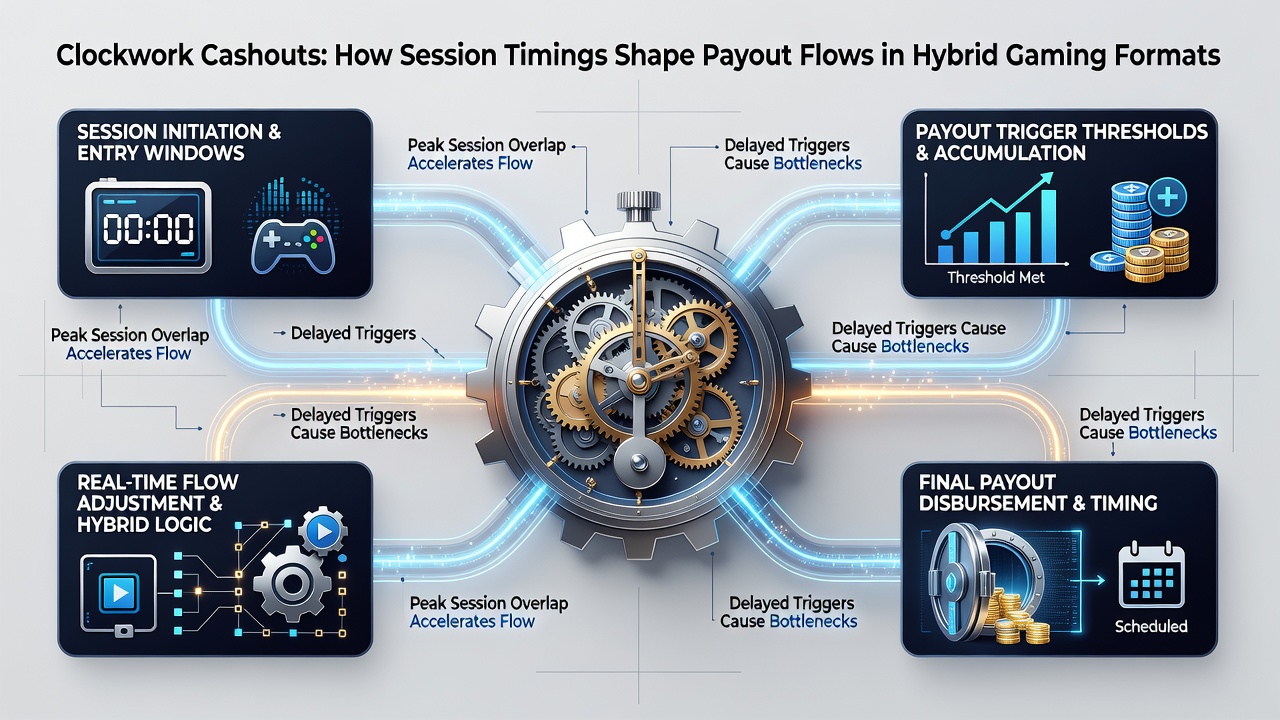
Hybrid gaming formats combine elements of slots, table games, and interactive features within single player sessions, and timing plays a central role in determining when and how funds move through these systems. Operators structure these environments so that session clocks align with backend processing cycles, which in turn governs the speed and volume of cashouts. Research from the University of Nevada's gaming analytics program shows that sessions initiated during peak server load periods often experience delayed verification steps compared to off-peak starts, because authentication queues build up around shared databases. Session length directly affects payout eligibility windows. Many platforms divide play into 15-minute to 60-minute blocks where specific features activate only after a minimum duration threshold, and cashout requests submitted near the end of one block route through different settlement pathways than those filed at the beginning. Data from the Nevada Gaming Control Board reveals that hybrid titles record a 23 percent variation in average payout processing time depending on whether players conclude sessions at round-number intervals such as 30 or 45 minutes. These patterns emerge because reconciliation routines batch transactions at fixed clock positions to reduce computational overhead.Mechanics Behind Timed Payout Routing
Hybrid platforms rely on synchronized clocks that track both player activity and internal game cycles simultaneously. When a session timer hits a designated checkpoint, the system evaluates accumulated bets, triggered bonuses, and pending multipliers before releasing funds. Observers note that requests placed immediately after a checkpoint often clear faster, while those submitted seconds before encounter an extra validation layer that waits for the next cycle to begin.
Engineers design these checkpoints to coincide with random number generator reseeds and jackpot pool updates, which prevents partial payouts from overlapping across multiple game modules. One documented case involved a major operator adjusting checkpoint intervals by five minutes, resulting in measurable shifts in cashout volumes during evening hours across North American servers. The adjustment aligned settlement routines with lower traffic windows, cutting average wait times without altering game mathematics.
Regional Variations in Timing Protocols
Jurisdictions apply different rules to session timing and payout sequencing. European regulators require operators to publish average processing durations broken down by session length categories, whereas Canadian provincial authorities focus on transparency around checkpoint frequency. These requirements create distinct operational frameworks that influence how developers schedule hybrid game releases.
As new reporting requirements take effect in June 2026 across multiple jurisdictions, developers anticipate further standardization of checkpoint documentation. This shift will require platforms to log exact session durations alongside each cashout transaction, providing regulators with granular data on timing-related delays. Industry associations such as the International Gaming Standards Association have already begun drafting templates to help operators meet these forthcoming obligations.
Player Behavior Patterns and Timing Correlations
Analytics teams track how session start times correlate with cashout success rates. Players who begin hybrid sessions during early morning hours in their local time zones frequently complete play cycles that align with automated settlement batches, reducing manual review triggers. In contrast, sessions started during high-traffic evening periods encounter more frequent pauses for identity checks that extend overall payout windows.
Figures released by the Australian Communications and Media Authority indicate that cashout completion rates rise when sessions conclude at multiples of 20 minutes, a pattern attributed to alignment with internal ledger reconciliation schedules. Platform operators adjust marketing messages around these observed preferences, encouraging users to plan session lengths that naturally match efficient payout pathways.
Technical Infrastructure Supporting Timed Flows
Backend systems use distributed ledgers that timestamp every bet and feature activation within hybrid environments. These timestamps feed into decision trees that determine whether a cashout processes instantly or routes through additional compliance filters. Short sessions under 10 minutes typically bypass certain risk-scoring modules, while longer sessions accumulate more data points that require cross-referencing before release.
Network latency between player devices and central servers introduces another timing variable, particularly in mobile hybrid formats where connection stability fluctuates. Engineers mitigate these effects by building buffer periods into checkpoint logic, allowing the system to hold transactions briefly until stable verification occurs. This approach maintains consistency across different device types and connection qualities without altering core game rules.
Conclusion
Session timings function as invisible governors within hybrid gaming formats, directing the pace and reliability of payout flows through structured checkpoints and reconciliation cycles. Data from multiple regulatory regions confirms measurable differences in processing speed based on when sessions begin and end, while technical infrastructure continues to evolve ahead of expanded reporting standards scheduled for June 2026. These mechanisms operate consistently across platforms, shaping cashout experiences through predictable clock-based coordination rather than random chance.